Cart
0
You may also like


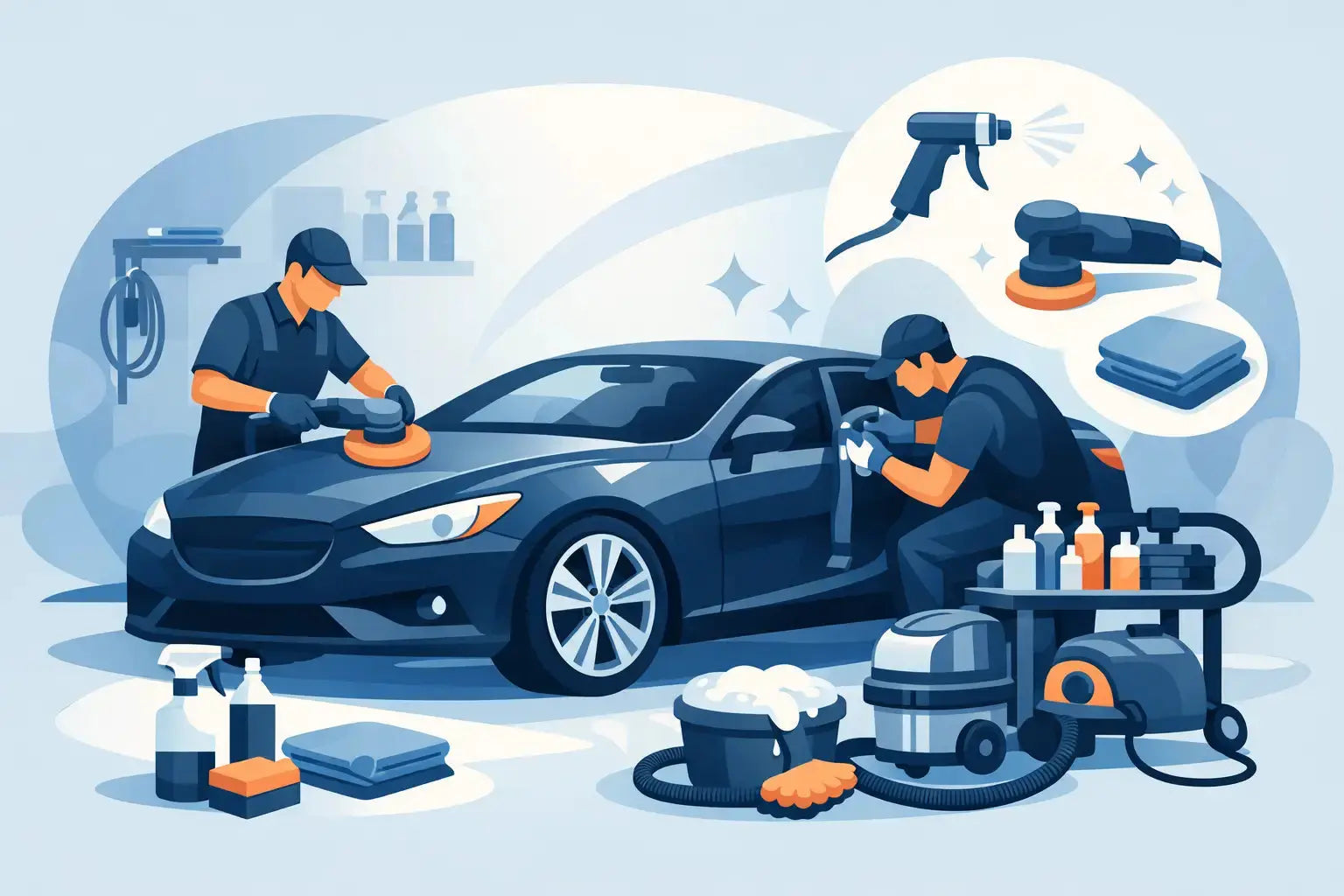
A proper detail is easy to spot. The paint looks sharper, the wheels are cleaner deep into the barrels, the trim has an even finish, and the interior feels reset rather than just wiped over. So when people ask what do professionals use to detail cars, the honest answer is not one miracle product. It is a system - the right chemicals, the right tools, and a process that avoids doing damage while chasing a better finish.
That matters because professional results do not come from throwing harsh cleaners at every surface. They come from using purpose-made products in the right order. Less guesswork. More gloss.
Professionals usually work in stages: pre-wash, contact wash, wheel and tyre cleaning, decontamination, paint correction if needed, protection, glass, trim, and interior. Each stage has its own products because each surface holds different grime and reacts differently to chemicals.
A trade detailer will not use an all-purpose cleaner for everything unless the job is basic and time is tight. On higher-value cars, classics, dark paint, and soft finishes, product choice gets more precise. That is where the gap opens up between a quick wash and a proper detail.
Professionals start by removing as much dirt as possible before touching the paint. That usually means a citrus pre-wash, traffic film remover, or snow foam. The aim is simple: loosen road grime, salt, bug residue and general filth so less of it gets dragged around during the contact wash.
Snow foam is popular because it clings well and gives good coverage, but it is not magic on its own. A decent pre-wash chemical does the real work. Some pros favour stronger traffic film removers for heavily soiled vans and winter-driven daily cars, while others stay with gentler citrus formulas on protected or more delicate finishes. It depends on how dirty the vehicle is and what protection is already on the paint.
After the pre-wash rinse, professionals move to a pH-balanced shampoo and safe wash media. That usually means microfibre wash mitts, grit guards in the buckets, and a method that keeps dirty water away from the paint as much as possible.
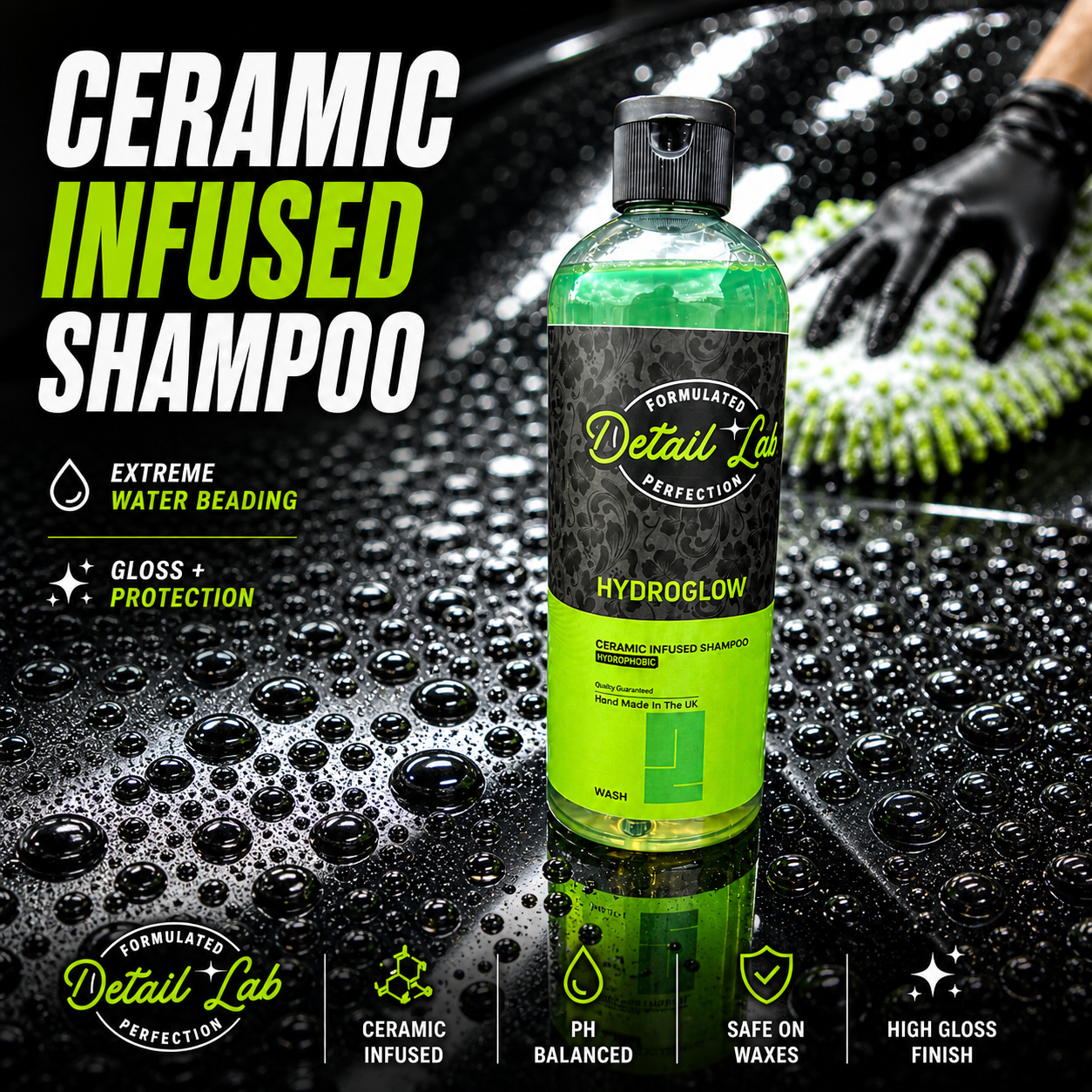
The shampoo itself is rarely chosen for foam alone. Slickness matters more because it helps the mitt glide and reduces the chance of inflicting swirls. Some shampoos are designed to preserve waxes and sealants, while stronger wash solutions may strip old protection when a reset is needed.
Wheels get their own kit for a reason. Brake dust is aggressive, wheel faces collect tar and iron fallout, and tyres hold old dressings and road grime that standard shampoo will not shift properly.
Professionals often use dedicated wheel cleaners that are safe on lacquered, painted, powder-coated and alloy finishes. Iron fallout removers are common too, especially on neglected wheels, because they dissolve embedded ferrous contamination that normal cleaners leave behind. For tyres, a proper cleaner is used to strip old dressing and brown residue so the new dressing bonds properly and leaves a more even finish.
Brushes matter here as much as chemicals. Soft wheel face brushes, barrel brushes and tyre scrubbers all have their place. The wrong brush can mark delicate finishes. The right one speeds the job up and gets into the awkward areas most people miss.
Once the loose dirt is gone, the real detailing starts. This is where professionals separate a car that is clean from one that looks properly finished.
Even after a good wash, paint can still feel rough. That roughness comes from bonded contamination such as tar, fallout, tree sap and industrial grime. Professionals remove it with tar removers, iron removers and clay bars or clay mitts.
Chemical decontamination is often the first move because it breaks down contamination without physical contact. Clay then removes what is left. The trade-off is that clay can mark soft paint if used badly, so lubrication and technique matter. On a car heading for machine polishing, that risk is easier to manage. On a well-kept car needing only a maintenance detail, a pro may use the least aggressive method possible.
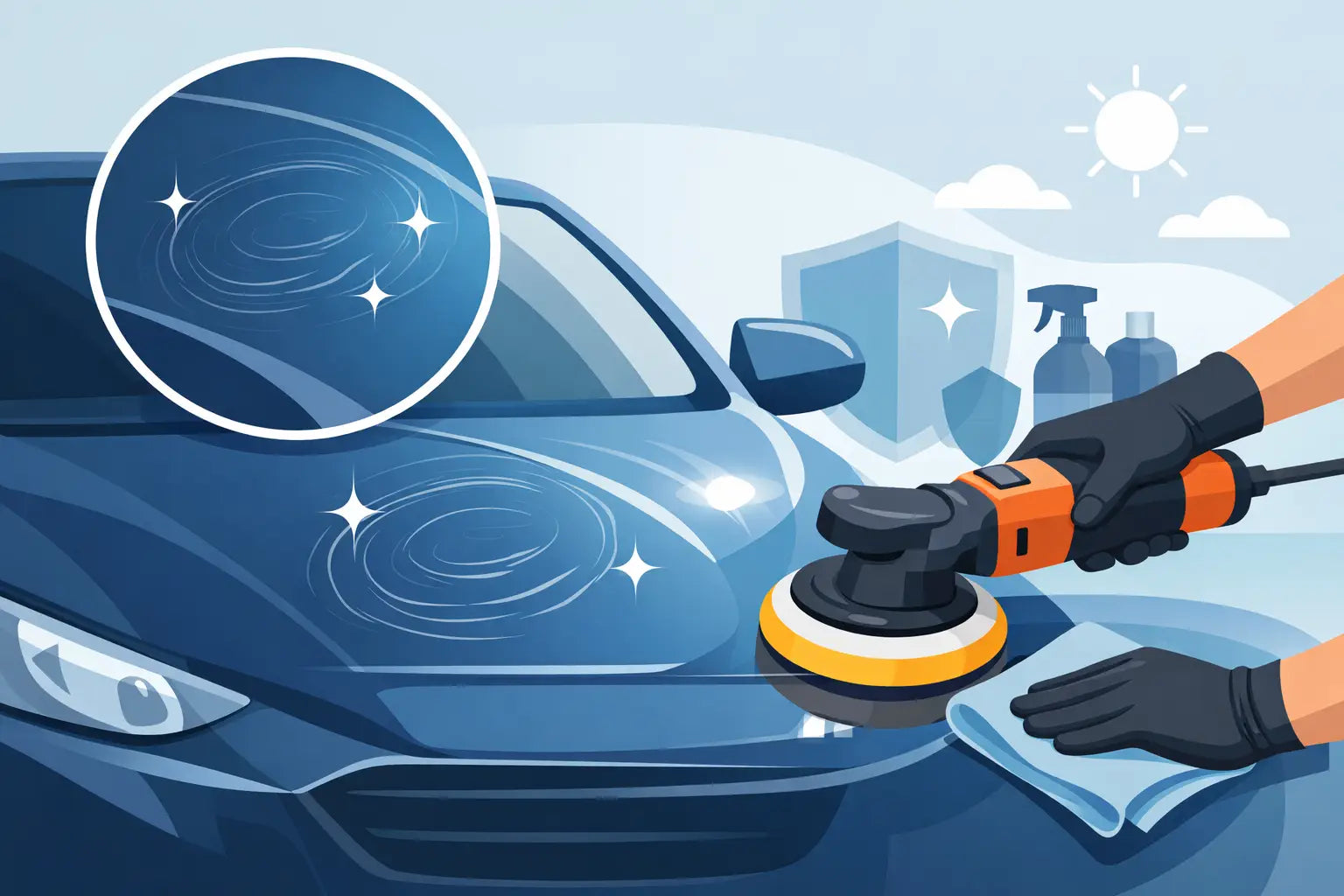
This is the part many people picture first, but polishing is not part of every detail. Professionals use dual action polishers and, in some cases, rotary machines to remove swirl marks, oxidation, light scratches and haze. The machine is only half the story. Pads, compounds and polish choice matter just as much.
A cutting compound paired with a firmer pad removes defects faster, but it can leave haze on softer paint. A finishing polish and softer pad refine the surface and add clarity. Pros test a small area first because every paint system reacts differently. Hard German clear coat does not behave like softer Japanese paint, and black paint will always show more than silver.
Good professionals are not obsessed with maximum cut on every job. They look for the best improvement with the safest margin. Sometimes that means a one-step polish for a strong gloss boost. Sometimes it means leaving deeper defects in place rather than chasing them too hard.
Before protection goes on, professionals often use a panel wipe or paint prep product. This removes polishing oils and residue so waxes, sealants or ceramic coatings bond properly. Skip this step and the finish might still look good, but durability can drop off fast.
Protection is where the detail starts paying back. Clean paint looks good for a day. Protected paint stays easier to wash, sheds water better, and holds its finish longer.
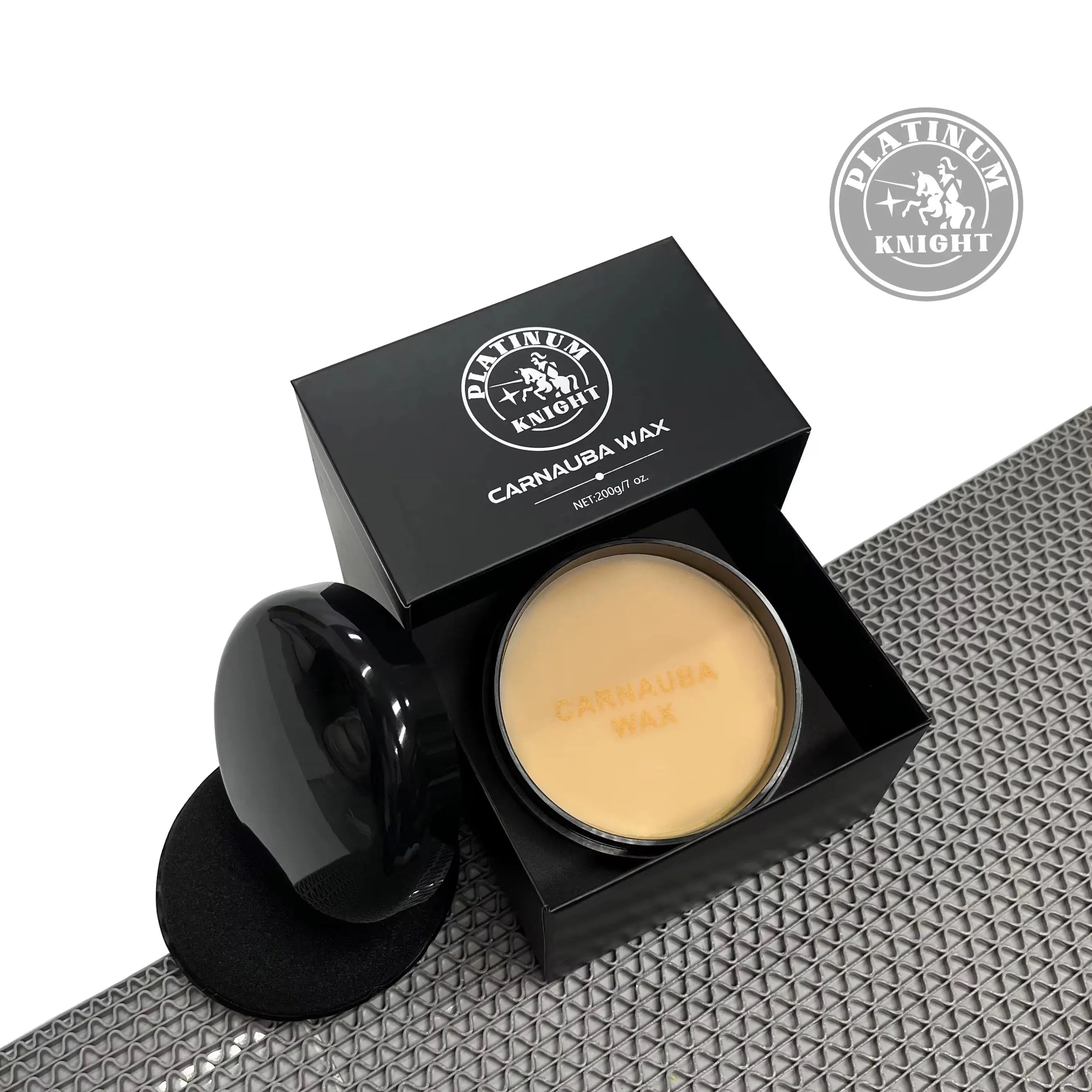
Hard waxes are still popular because they give a rich, warm finish, especially on darker colours and weekend cars. Sealants usually win on durability and sharpness, making them a strong choice for daily drivers that see rain, motorway miles and winter grime.
Professionals pick based on the owner, not just the product. A garage-kept classic may suit a premium wax. A daily diesel estate that lives outdoors may benefit more from a durable sealant. There is no point fitting the wrong kind of protection just because the label sounds impressive.
Ceramic coatings sit higher up the ladder. They offer strong chemical resistance, serious water behaviour and longer-term protection, but they demand better prep and tighter application. A coating on badly prepared paint only locks in flaws.
That is why professionals treat coatings as a system, not a quick add-on. Wash, decontaminate, polish if needed, panel wipe, then apply carefully in the right conditions. Done properly, the finish is easier to maintain and keeps its edge for longer.
Not every professional finish relies on a full coating or wax every time. Quick detailers, spray sealants and drying aids are used to boost gloss, add slickness and top up protection during maintenance details. They save time and give visible results, especially on customers' cars that need regular upkeep rather than full correction.
A proper detail does not stop at the paint. Interiors need the same logic - right product, right surface, no greasy shortcuts.
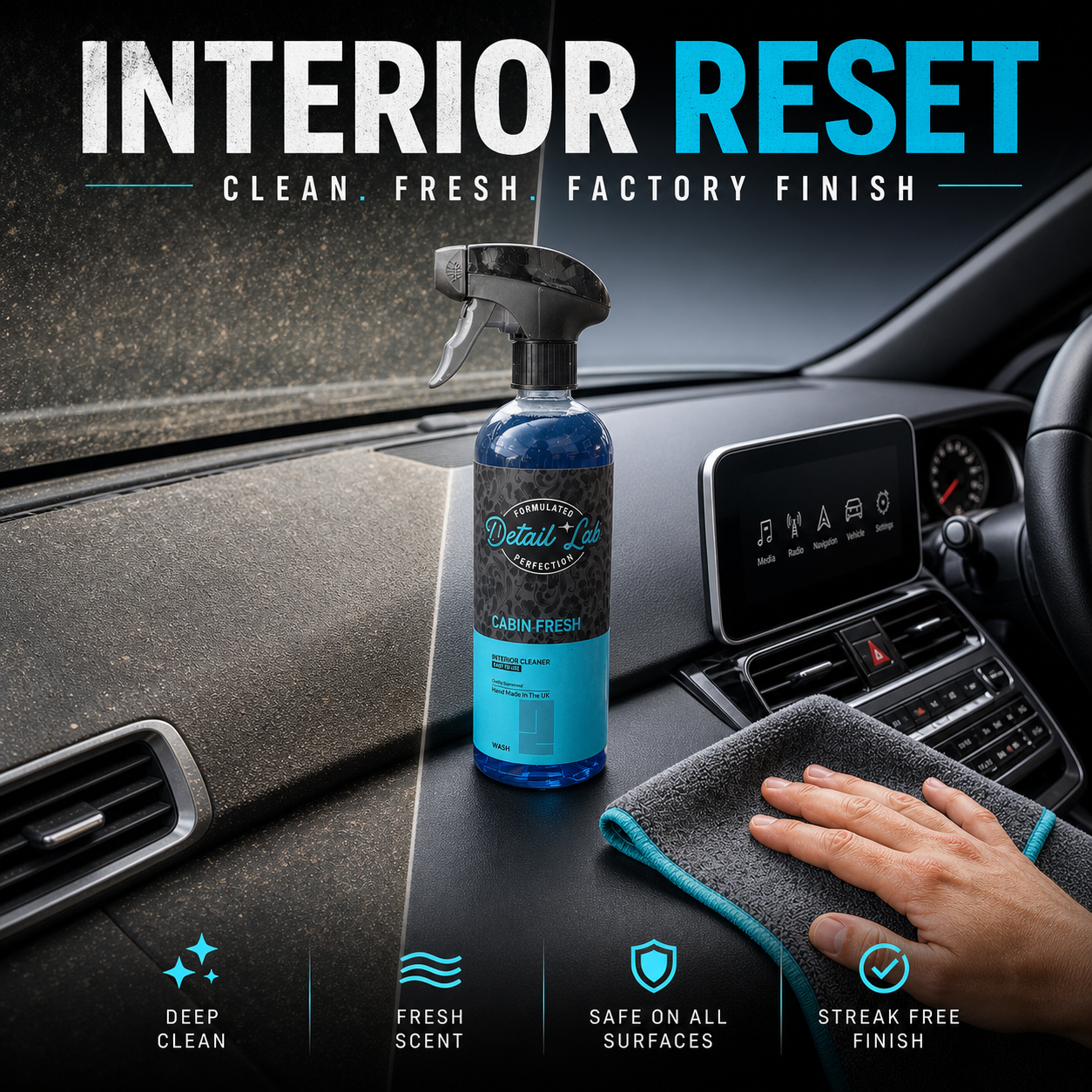
Professionals typically use interior cleaners that lift body oils, dust and light staining without leaving shiny residue behind. That matters on modern dashboards and trims, where a greasy finish looks cheap and attracts more dust. On leather, a dedicated cleaner is safer than hitting it with a harsh all-purpose product. Fabric seats and carpets may need stronger cleaners, agitation brushes and wet extraction on heavier jobs.
Glass cleaners also matter more than people think. A streaky windscreen can ruin the feel of an otherwise clean car. Pros use low-residue glass products and quality microfibres, often keeping separate cloths for glass to avoid cross-contamination from dressings or polish dust.
Ask what do professionals use to detail cars, and it is easy to focus only on bottles. The tools deserve just as much attention. Pressure washers, foam lances, quality trigger sprayers, machine polishers, pads, brushes, applicators, drying towels and proper microfibres all change the result.
The difference is not just speed. Good towels dry without marring. Good brushes clean intricate areas without scratching. Good sprayers lay product down evenly, which improves performance and reduces waste. Cheap kit tends to cost more in the long run because it works poorly and can create problems you then need to fix.
That is one reason bundled detailing kits make sense for home users. Instead of piecing together random products that may or may not work well together, a sensible kit gives you a matched process. If you want enthusiast-grade results without overcomplicating the job, that route is usually the smarter buy.
Yes - up to a point. Most owners can achieve a seriously clean, glossy, protected finish at home with the right wash, wheel, interior and finishing products. In many cases, the biggest upgrade comes from using proper detailing chemistry rather than supermarket cleaners and old sponges.
Where the gap still shows is in paint correction, lighting, experience and time. Machine polishing safely takes practice. Ceramic coating prep has to be right. Deep interior restoration can need specialist equipment. But for regular maintenance and visible improvement, the same type of products professionals use are well within reach. That is exactly why brands like Detail Lab focus on serious formulas that work in the real world, not just in a studio.
If you want your car to look sharper, cleaner and easier to maintain, think less about chasing one hero product and more about building a process that works every time.