Cart
0
You may also like


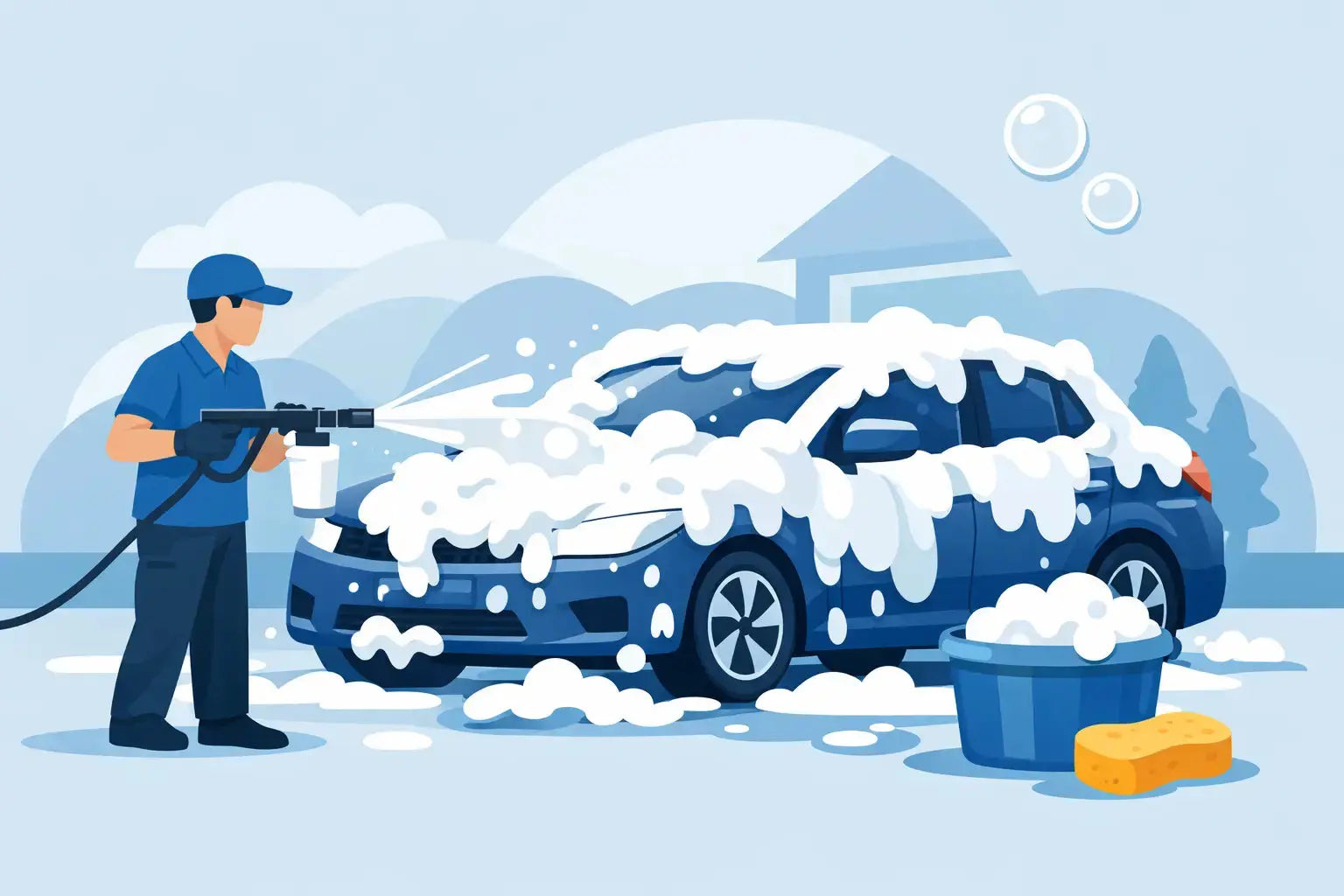
If your wash routine starts with a sponge straight onto a dirty panel, you are making life harder than it needs to be. Learning how to use snow foam properly is one of the easiest ways to get a safer wash, cut down the risk of swirls, and shift the grime that plain water leaves behind.
Snow foam is not there to replace your contact wash. It is there to make that wash safer and more effective. Done right, it softens and lifts road film, traffic grime, loose dirt, and whatever else your paint has picked up through the week. Done badly, it turns into thick white theatre with very little cleaning power.
A good snow foam is a pre-wash product. That matters. Its main job is to loosen contamination before you touch the paint with a mitt. Less dirt left on the surface means less chance of dragging grit across the clear coat.
This is where a lot of people get it wrong. They judge snow foam by how thick it looks rather than what it removes. Big foam is satisfying, but cleaning power matters more than blanket-like coverage. Some formulas cling for longer. Some rinse cleaner. Some are pH neutral and kinder to waxes and sealants, while stronger options will strip more muck but may shorten the life of your protection. It depends on the condition of the vehicle and what finish you are trying to preserve.
If you want proper results, use the right kit. A pressure washer with a foam lance will give you the best spread, cling, and consistency. You can use a pump sprayer style foamer, but expect less coverage and less dwell. It still works for lighter grime, just not as aggressively.
You will also need diluted snow foam mixed to the product instructions, a hose or pressure washer for rinsing, and a wash mitt and shampoo for the contact wash that follows. Snow foam is step one, not the full job.
Do not apply snow foam to hot panels in direct sun. The product will dry too quickly, which reduces cleaning performance and can leave residue behind. Early morning, late afternoon, or shade is better. The paint should be cool to the touch.
If the car is heavily coated in mud, knock the worst of it off first with a rinse. You are not trying to blast the paint spotless at this stage. Just remove the heavy stuff so the foam can get to the traffic film underneath.
This is the part people rush, then blame the product. Too weak and it will not clean properly. Too strong and you waste product without gaining much. Follow the dilution guidance for your chosen snow foam and your foam lance bottle size.
Water quality, lance setup, and pressure washer output all affect performance. If the foam is coming out watery, adjust the lance rather than dumping in twice as much product. If it is too thick and dry, back it off. You want even, wet foam that clings and works, not shaving cream.
When working out how to use snow foam, this is one of the simplest habits that makes sense straight away. Apply from the lower panels upwards. The lower half of the car is usually the dirtiest, and coating it first gives the product more dwell time where it is needed most.
Cover the whole exterior evenly, including the front bumper, mirrors, tailgate, and around badges where grime builds up. You do not need to bury the car under a mountain of foam. Full, even coverage beats waste every time.
Give the foam time to work. Around five to eight minutes is usually enough, depending on the weather and the product. You should see the foam starting to break down and slide off the panels, taking loosened dirt with it.
Do not let it dry on the surface. That is the line. If conditions are warm or breezy, shorten the dwell time. If the car is only lightly dusty, you may not need the full wait. More time is not always more cleaning.
Rinse from the top down using a pressure washer or strong hose flow. This pushes the loosened contamination off the vehicle rather than redistributing it. Pay attention to lower doors, sills, wheel arches, and the rear end, where grime tends to stick hardest.
At this point, the car should look cleaner, but not finished. That is normal. Snow foam removes a good amount of dirt, but bonded contamination and remaining film still need a contact wash.
Yes. In most cases, absolutely.
Snow foam is a pre-wash, not a complete wash. If you rinse and walk away, the car will still have residue on the paint. Follow with a safe two-bucket wash or your preferred contact wash method using a quality shampoo and clean mitt.
The upside is simple. Because you have already removed a layer of dirt, your wash mitt is dealing with less contamination. That means a safer wash and a better finish.
If your car is protected with wax, sealant, or a ceramic topper, choose a pH neutral snow foam. These are designed to clean effectively while being gentler on existing protection. They are ideal for maintenance washes on cars that are already looked after.
If the vehicle is neglected, a stronger pre-wash may be worth it. You will shift more grime, but there is a trade-off. Stronger chemistry can weaken wax or toppers over time. There is no magic answer here. If protection matters most, stay gentler and wash more often. If cleaning power matters most, accept that you may need to reapply protection sooner.
The biggest mistake is using snow foam as a gimmick instead of a cleaning step. Thick foam photos look good, but if the dilution is wrong or the lance is badly set up, you are just covering the car in product for no real gain.
Another common error is applying it in direct sunlight. The foam dries, leaves marks, and stops working properly. Scrubbing the foam with a mitt before rinsing is another one to avoid. That defeats the point of a touch-free pre-wash and puts dirt straight back into contact with the paint.
Then there is expectation. Snow foam will not remove tar spots, iron fallout, or old protection failure on its own. It is brilliant at loosening surface grime, not solving every contamination problem in one pass.
It earns its keep most on daily drivers, dark paint, winter grime, and anything that spends time on motorways. If your car picks up road salt, diesel film, or general week-to-week muck, a proper pre-wash pays off fast.
It also helps if you care about finish quality. Black, navy, and other dark colours show wash marks far more easily. The safer your wash process, the better those panels stay looking under sunlight and forecourt lighting.
If the car is only lightly dusty and has barely been driven, snow foam is still useful, but the difference will be smaller. That does not mean it is pointless. It means the gain is in safety more than dramatic visual cleaning.
As often as you wash, if you want the safest routine. For maintained cars, using snow foam before every contact wash makes sense. It adds only a few minutes and reduces the amount of contamination left on the paint.
If you are washing in colder months, it is even more useful. Winter roads are brutal on paintwork, especially in the UK, where rain, grit, and filth seem to build up overnight. A solid pre-wash step is not overkill. It is common sense.
The product matters, but so does the gear. A decent foam lance, correct dilution, and strong pressure washer output can make an average wash much better. If your current setup produces runny foam with no dwell, fix the setup before writing off snow foam entirely.
That is one reason enthusiast-grade products and proper wash kits make life easier. You get more consistent results, less guesswork, and a cleaner car without having to fight bargain-bin chemistry. Detail Lab is built around that idea - serious results at home, minus the waffle.
If you want your wash routine to be safer, faster, and better on the finish, snow foam is worth using properly. Not for the spectacle. For the result. Less grit on the paint, less risk in the contact wash, and a cleaner base to build real gloss on.